Alternative Lending Blogs Mortgage Tips

The Underwriter’s Ear: How to Explain a Credit Hit and Win Your Mortgage

In the 2026 Canadian mortgage market, underwriters are no longer just looking at your 3-digit score; they are looking at your story. Thanks to new OSFI (Office of the Superintendent of Financial Institutions) guidelines, lenders are required to perform “enhanced due diligence” on any application with historical credit “bruising.”

If a lender asks you for a Letter of Explanation (LOX) regarding a late payment, a collection, or a past insolvency, don’t panic. This is actually a massive opportunity. It’s your chance to move beyond the cold math of the credit bureau and prove your “Hero” status.At LendingMoney.ca, we help our clients draft these letters every day. Here is the 2026 playbook for explaining a credit hit to a mortgage underwriter.

1. The Three Golden Rules of the LOX

Before you start typing, keep these three principles in mind:

  • Be Honest: Underwriters have access to more data than ever before. If you try to hide a detail, they will find it, and your application will be declined for “misrepresentation.”
  • Be Concise: An underwriter reviews dozens of files a day. They don’t want a 10-page novel; they want three paragraphs that explain the What, the Why, and the Resolution.
  • Be Factual: Avoid emotional language. Don’t say, “It was a really hard time.” Instead, say, “Due to a medical leave between June and August 2024, my household income was reduced by 40%.”

2. The Structure of a Winning Explanation

A professional Letter of Explanation should follow this exact 3-part flow:

Part A: The Incident (What Happened?)

Identify the specific item on your credit report.

  • Regarding the 30-day late payment on my RBC Credit Card in October 2024…

Part B: The Extenuating Circumstance (The Why)

Explain the specific, one-time event that caused the issue. Underwriters look for “isolated incidents” rather than “chronic habits.”

  • “This occurred during a transition between employers where my final paycheck was delayed by three weeks.”

Part C: The Resolution (Why it Won’t Happen Again)

This is the most important part. You must prove that the situation has been fixed and your finances are now stable.

  • The account was brought current immediately upon receipt of funds. Since then, I have established a 3-month emergency fund and set up automated minimum payments to ensure no future oversights.

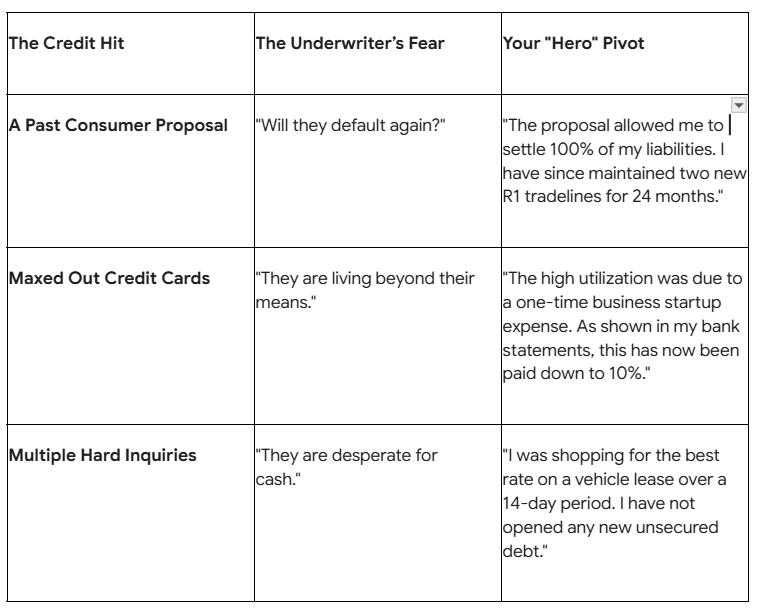
3. Common 2026 “Credit Hits” and How to Pivot Them

4. The Paper Trail (Supporting Documents)

In 2026, a letter isn’t enough – you need receipts. An underwriter is much more likely to accept your explanation if you attach:

  • Medical Notes: If a health issue caused the credit hit.
  • Termination/Hiring Letters: If it was due to a job gap.
  • Release of Lien/Discharge Papers: If it was a legal or tax issue.
  • Bank Statements: Showing the specific payment that cleared the debt.

5. Sample Template: The Late Payment Explanation

RE: Mortgage Application #12345 – Letter of Explanation for Credit Inquiry/Late Payment

To the Underwriting Department,

I am writing to provide context regarding the 60-day delinquency on my [Creditor Name] account in early 2025.

During this period, my family experienced a temporary financial strain due to [Reason: e.g., a localized flood not fully covered by insurance]. This was a one-time, unforeseen event.

Since that time, the account has been paid in full and maintained in good standing. My current employment at [Company] is stable, and I have maintained a 700+ score on all other tradelines. I have also implemented a [e.g., automated savings plan] to ensure total financial resilience moving forward.

Thank you for your consideration of my application.

Sincerely, [Your Name]

Why Your Story Matters at LendingMoney.ca

At LendingMoney.ca, we specialize in “Story-Based Underwriting.” We know that life happens—divorce, illness, and business pivots can all leave a mark on your credit report. But a mark isn’t a dead end.

We work with alternative lenders who prioritize the current person over the past score. We help you draft the explanations that turn a Maybe into an Approved.

Need help explaining your credit history to get a mortgage? [Connect with a Financial Hero] today and let’s tell your story the right way.

Read blog – How to Fix Your Credit After a CRA Debt Settlement

Blogs Tax Debt Solutions

Unexpected Debt to the CRA? What can you do to pay what you owe?

It is April 2026, and for many Canadians, the arrival of a Notice of Assessment (NOA) from the CRA brings a stomach-turning surprise: a balance owing that wasn’t in the budget.

Whether it’s due to a self-employment tax miscalculation, a clawback of benefits, or a simple filing error, unexpected tax debt is a financial fire that needs to be put out quickly. In 2026, the CRA’s interest rate on overdue tax sits at 7% compounded daily, meaning your debt grows every single morning you leave it unpaid.

At LendingMoney.ca, we specialize in Credit Rehabilitation. We know that tax debt is the #1 hurdle to getting a traditional mortgage or car loan. Here is what you need to do if you find yourself with an unexpected CRA bill this tax season.

1. Don’t Ghost the CRA (File Anyway!)

The biggest mistake homeowners make is delaying their tax filing because they know they can’t pay.

  • The Penalty: If you file late and owe money, the CRA hits you with an immediate 5% penalty on the balance, plus 1% for every month you are late.
  • The Hero Move: File your taxes by the April 30th deadline (or June 15th if self-employed), even if you have $0 in the bank. Filing on time stops the late-filing penalty, leaving you with only the interest to manage.

2. Request a Payment Arrangement

If you can pay off the debt within a few months, the CRA is surprisingly reasonable-if you talk to them first.

  • TeleArrangement: You can call the CRA to set up a “Pre-Authorized Debit” plan to pay your debt over time (usually up to 12 months).
  • The Reality: While this stops aggressive collection action (like wage garnishing), the 7% daily interest continues to run. You are essentially taking a high-interest loan from the government.

3. Leverage Your Home Equity (The Interest “Hack”)

If your tax debt is substantial ($10,000 to $100,000+), using a payment plan is often the most expensive way to handle it.

  • The 2026 Math: * CRA Interest: ~7% daily compounded (effectively much higher).
  • Home Equity Loan: monthly compounded.
  • The Move: Using a Home Equity Line of Credit (HELOC) or a Second Mortgage from LendingMoney.ca to pay the CRA in full immediately. You swap “predatory” daily interest for a stable, lower-rate mortgage payment. Plus, the CRA is paid, which clears your name for future bank approvals.

4. The Taxpayer Relief Hail Mary

Did your debt happen because of a serious illness, a death in the family, or a natural disaster?

  • The Option: You can apply for Taxpayer Relief (Form RC4288).
  • What it does: If approved, the CRA can waive the penalties and interest on your account.
  • The Catch: They almost never waive the principal tax you owe. You still need a plan to pay the core debt, which is where an equity-based “bridge” loan becomes essential.

5. Why Banks Say No to Tax Debt

If you walk into a “Big Six” bank with a $20,000 CRA bill, they will likely decline your loan.

  • The Reason: Banks view CRA debt as a “Super Lien.” They know the government can freeze your accounts or put a lien on your house that takes priority over the bank’s own mortgage.
  • The LendingMoney.ca Solution: As an Alternative Lender, we aren’t afraid of CRA debt. We provide the funds to pay the CRA today, so your credit can begin its Rehabilitation tomorrow. Once the CRA is out of the picture, the big banks will be happy to talk to you again in a year.

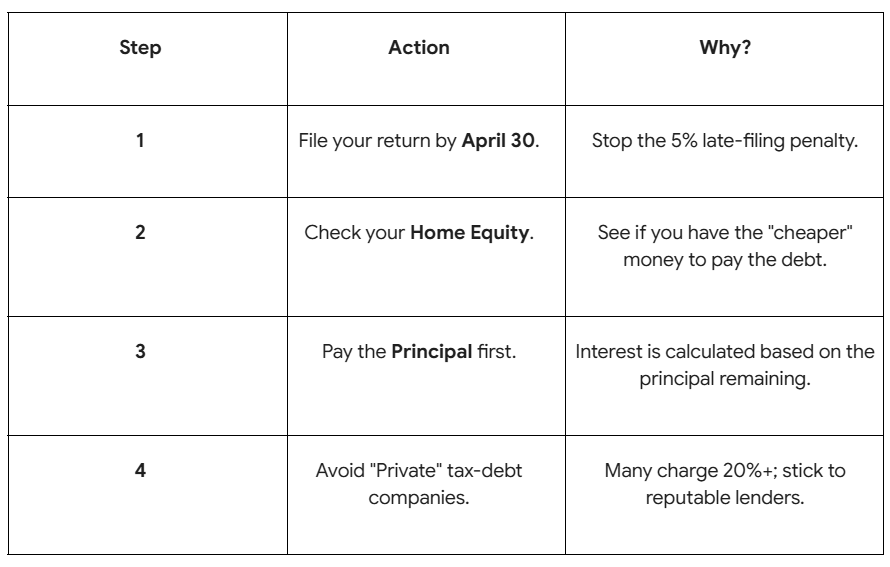
CRA Debt Survival Checklist (April 2026)

Turn Your Tax Debt into a Strategy

Unexpected debt to the CRA is a crisis, but it’s also an opportunity to restructure your finances. By using your home equity to clear the slate, you protect your credit score, stop the daily interest bleed, and regain control of your financial future.

Stunned by your 2026 Tax Bill? [Connect with a Financial Hero] at LendingMoney.ca. We’ll look at your home equity and find a way to pay the CRA so you can get back to what matters.

Read blog How to Pay CRA Debt With Home Equity

Blogs Debt Consolidation Debt Relief Financial Recovery Tax Debt Solutions

How to Pay CRA Debt With Home Equity

For many Canadians, debt owed to the Canada Revenue Agency (CRA) is the most stressful type of financial burden. Unlike a credit card company, the CRA has “super-priority” powers – they can garnish your wages without a court order, freeze your bank accounts, and even place a “Restricting Lien” on your home.

In 2026, the CRA’s daily compounded interest rates remain significantly higher than secured mortgage rates. If you are a homeowner, using your home equity to clear tax debt isn’t just a convenience – it’s a vital Credit Rehabilitation strategy to protect your property.

1. Why the CRA Debt is a “Financial Fire”

The CRA is not a typical lender. They don’t care about your credit score, but they do care about getting paid.

  • Daily Compounding Interest: In 2026, CRA interest rates on overdue taxes are roughly 9% to 10%, compounded daily.
  • The “Lien” Risk: If you ignore the debt, the CRA can register a lien against your property. This makes it almost impossible to sell your home or renew your mortgage with a traditional bank until the debt is paid.
  • The Bank’s Reaction: If a “Big Six” bank sees you have CRA debt, they will often issue an immediate decline on any loan or mortgage application. They see the CRA as a “predatory” creditor that has a higher claim to your assets than they do.

2. Option A: The Mortgage Refinance (The Clean Sweep)

This is the most common way to handle large tax bills. You replace your current mortgage with a new one that includes the amount you owe to the CRA.

  • How it Works: If you have $50,000 in tax debt, you increase your mortgage by that amount and the lender pays the CRA directly at the time of closing.
  • The Benefit: You swap 10% daily interest for a much lower mortgage rate.
  • The 2026 Rule: You can typically borrow up to 80% of your home’s appraised value.

3. Option B: The Second Mortgage (The “Bridge” Solution)

If you have a very low interest rate on your primary mortgage that you don’t want to lose, a Second Mortgage is the “Hero Move.”

  • How it Works: You take out a separate, smaller loan that sits behind your main mortgage.
  • The Benefit: You don’t have to break your first mortgage or pay “prepayment penalties.”
  • Why it’s used for CRA debt: Second mortgages are often easier to qualify for if your credit is “bruised” by your tax issues. At LendingMoney.ca, we use this as a 12-month bridge to pay the CRA, clear your name, and then move you back to a traditional lender once the “fire” is out.

4. Option C: The Home Equity Line of Credit (HELOC)

If your tax debt is smaller or you are self-employed and expect ongoing tax obligations, a HELOC offers the most flexibility.

  • How it Works: It’s like a giant credit card secured by your house. You only pay interest on what you use.
  • The Benefit: You can pay the CRA immediately and then pay back the HELOC on your own schedule.
  • The 2026 Requirement: Most lenders require a credit score of 680+ for a HELOC. If your score has dropped due to tax arrears, you may need to look at Options A or B first.

5. What if the CRA Already Has a Lien on My House?

Many homeowners think that once a lien is registered, they are “stuck.” This is a myth.

The LendingMoney.ca Strategy: We are an alternative lender who specializes in “Lien Payoffs.”

  1. Approve the loan based on your home’s equity.
  2. On closing day, the lawyer sends the funds directly to the CRA.
  3. The CRA issues a “Cessation of Charge” (discharges the lien).
  4. Your title is clear, your “super-priority” debt is gone, and you can finally breathe again.

6. The 2026 Taxpayer Relief Factor

While you are organizing your home equity, don’t forget about Taxpayer Relief. In 2026, the CRA still allows for the “Cancellation of Penalties and Interest” in cases of extreme financial hardship or circumstances beyond your control (like a serious illness).

  • The Pro-Tip: Pay the principal tax debt using your home equity first. This shows the CRA you are acting in “Good Faith,” which significantly increases your chances of getting the extra penalties waived later.

Don’t Let the CRA Own Your Home

Tax debt is heavy, but your home equity is the lever that can lift it. By moving high-interest, high-stress tax debt into a low-interest, structured mortgage, you protect your family’s most valuable asset and begin your path to Credit Rehabilitation.

Ready to see how much equity you can unlock to clear your tax bill? [Get a Confidential CRA Debt Assessment] with LendingMoney.ca today.

Read Blog – The Difference Between a B-Lender and an Alternative Lender

Blogs Mortgage Renewal

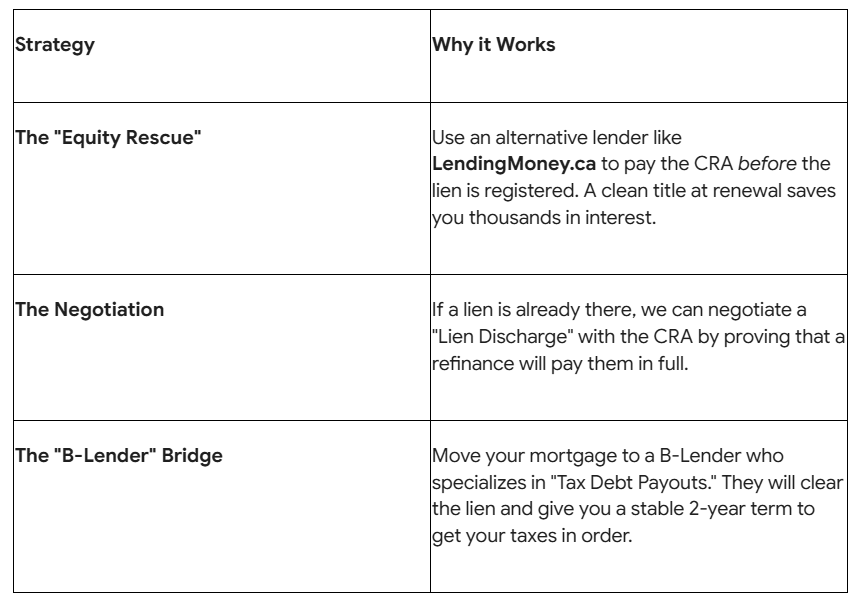
How a CRA Lien Affects Your Mortgage Renewal

A CRA lien is one of the most serious red flags a mortgage lender can encounter. In the 2026 lending environment, banks have become even more cautious about property titles, and a lien from the Canada Revenue Agency (CRA) can bring your mortgage renewal to a grinding halt.

If you are approaching your renewal date and have an outstanding tax debt, here is how a CRA lien changes the game and what you can do to save your home.

1. The Super Priority Problem

The reason banks fear a CRA lien is simple: The government usually gets paid first. In Canada, the CRA can exercise Super Priority for certain debts (like unremitted GST/HST or Payroll Source Deductions). Even if your bank registered their mortgage years ago, a CRA “Deemed Trust” claim can actually leapfrog the bank in the payout line.

  • The Impact on Renewal: When you renew, your bank performs a title search. If they see a CRA lien (Notice of Certification), they may refuse to renew your mortgage because their security is now at risk. They don’t want to be “second in line” behind the taxman.

2. You Lose Your Switching Power

In 2026, many homeowners shop around at renewal to find a lower interest rate.

  • The Trap: A new lender will never take on a mortgage if there is an existing CRA lien on the title. You are effectively “trapped” with your current lender, who may charge you a much higher “default” rate because they know you can’t leave.
  • The Result: You lose all your negotiating leverage. You are forced to accept whatever rate your current lender offers-if they offer one at all.

3. The Automatic Payout Requirement

If your current lender does agree to renew or if you are trying to refinance to get extra cash, the CRA lien must be dealt with as part of the legal process.

  • How it works: Your lawyer is legally required to use the mortgage funds to pay off the CRA lien before any money goes to you or your other debts.
  • The Risk: If the tax debt is large enough, it might eat up all your equity, leaving you with a larger mortgage but no actual cash in hand to fix your financial situation.

4. The 2026 Risk Premium

Lenders in 2026 use AI-driven risk modeling. A CRA lien is seen as a sign of “systemic financial distress.”

  • The Cost: Even if a lender agrees to renew with a lien on title, they may add a “Risk Premium” to your interest rate. You could end up paying 2% to 3% more than a neighbor with a clean title. Over a 5-year term, this can cost you tens of thousands of dollars.

How to Fix the Situation Before Renewal

If you know you have a CRA debt but they haven’t placed a lien on your house yet, now is the time to act.

Don’t Let a Lien Steal Your Home

A CRA lien is a legal lock on your house, but LendingMoney.ca has the keys. We specialize in helping homeowners pay off the government so they can walk into their mortgage renewal with a clean title and a Financial Hero status.

Is your mortgage renewal coming up while you owe the CRA? [Connect with a Tax-Debt Specialist] at LendingMoney.ca today. We’ll help you clear the title and keep your home.

Reed More Blog – How to Fix Your Credit After a CRA Debt Settlement

Blogs CRA Credit After CRA Debt Settlement

How to Fix Your Credit After a CRA Debt Settlement

Settling a debt with the Canada Revenue Agency (CRA) is a massive relief, but it often leaves a “footprint” on your financial life. In 2026, the CRA does not report your tax balances to credit bureaus like Equifax or TransUnion, but the actions they take to collect that debt certainly do.

If you’ve recently paid off a CRA debt through a settlement, a refinance, or a Consumer Proposal, here is your 2026 roadmap to Credit Rehabilitation.

1. Verify the “Lien Release”

If your tax debt was severe enough that the CRA registered a Notice of Certification (Lien) against your property, paying the debt is only half the battle.

  • The Reality: The CRA does not always automatically notify the Land Registry or the credit bureaus that the lien is gone.
  • The Hero Move: Ensure your lawyer obtains a Cessation of Charge or a Discharge of Lien. You must send a copy of this document to both Equifax and TransUnion. Until you do, a lender looking at your “Public Records” section will still see an active tax lien, which is a major “Red Flag.”

2. Address “Indirect” Credit Damage

While the CRA itself doesn’t report late payments, the symptoms of tax debt usually hurt your score. If you were behind on taxes, you likely missed other payments or maxed out credit cards to keep up.

  • The Audit: Now that the CRA is paid, go through your credit report. Are there “30-day lates” on your credit cards from the months you were struggling with tax debt?
  • The Rehabilitation: You cannot delete accurate late payments, but you can “drown them out” with new positive data. Start a streak of 12 months of perfect payments on your remaining accounts. In the 2026 algorithm, recent behavior carries more weight than year-old mistakes.

3. Re-Establish “A-Lender” Tradelines

Many people use a Private Mortgage or a High-Interest Loan to settle their CRA debt. While effective, these “C-Lender” products don’t always help your score.

  • The Move: To move back to a bank (A-Lender), you need at least two active tradelines with at least a $2,000 limit.
  • The 2026 Strategy: If your cards were closed, open a Secured Credit Card and a Small Installment Loan. At LendingMoney.ca, we recommend using these for small, recurring utility bills to prove to the bank that your “Tax Crisis” was an isolated incident, not a lifestyle.

4. The “Income Stability” Story

In 2026, underwriters are looking for the “Why” behind your tax debt.

  • The Narrative: If you settled a CRA debt, be prepared to explain it in your next mortgage application. Was it a one-time business error? A divorce?
  • The Proof: Keep your Notice of Assessment (NOA) for the year the debt was settled. Showing a “$0 Balance Owing” on your most recent NOA is the single most important document for a newcomer or self-employed borrower to prove they are back in “Hero” status.

5. Avoid the “Refund Set-Off” Trap

Even after a settlement, the CRA may sometimes “offset” your future tax refunds or GST credits to cover old interest or penalties that weren’t fully cleared.

  • The Risk: If you are counting on a tax refund to pay your credit card bill, and the CRA takes it, you could miss a payment and hurt your score again.
  • The Hero Move: Check your CRA “My Account” portal one month after your settlement to ensure the balance is exactly $0.00. Don’t assume the file is closed until you see it in digital black and white.

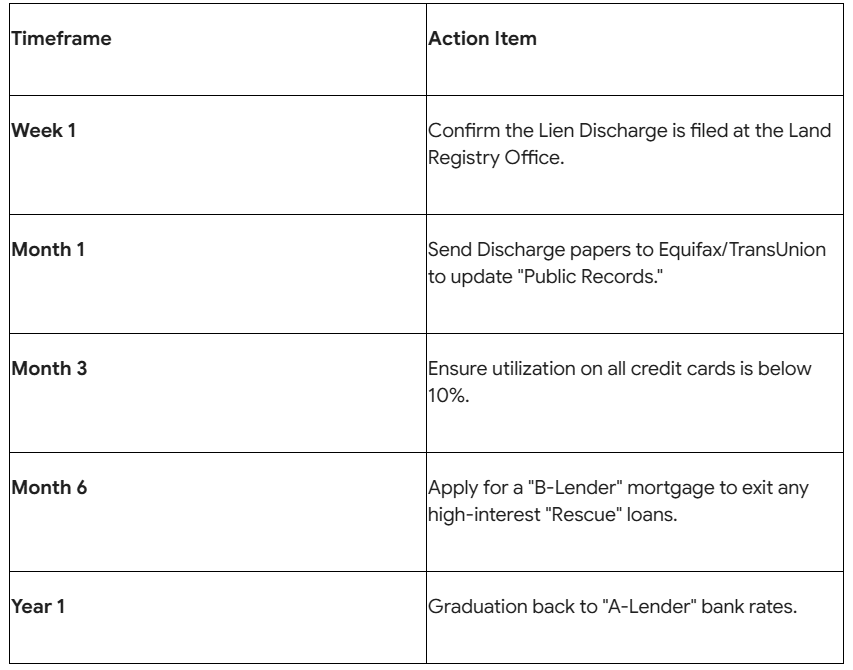
Credit Rehab Timeline After CRA Settlement

Your Fresh Start Starts Now

Paying the CRA is the hardest part. Now that the government is out of your bank account, you can finally focus on building your own wealth. At LendingMoney.ca, we don’t just help you pay the debt; we stay with you for the Credit Rehabilitation that follows.

Just finished a CRA settlement and want to know your next move? [Connect with a Financial Hero] at LendingMoney.ca. We’ll help you clean up the paperwork and get you back on the path to a prime-rate mortgage.

Blogs CRA Credit Building Credit Score Personal Finance

Welcome to Canada: Your 2026 Guide to Building Credit from Day 1

Moving to a new country is a monumental achievement. You’ve navigated the immigration process, secured a place to live, and perhaps started a new career. However, many newcomers face a frustrating catch-22: you need credit to rent an apartment, get a phone plan, or buy a car, but you can’t get credit because you have no Canadian history.

In 2026, the Big Six banks and alternative lenders like LendingMoney.ca have new tools to help you bridge this gap. Here is your roadmap to building a Financial Hero profile in your first 12 months.

1. The 2026 Reality: Your Foreign History Matters (Finally)

For decades, your credit history stayed behind in your home country. In 2026, that has changed thanks to cross-border data partnerships.

  • The Bridge Program: Companies like Nova Credit now partner with Canadian lenders to pull your credit history from countries like India, the UK, Brazil, the Philippines, and more.
  • The Hero Move: Before you apply for a standard Newcomer Package, ask if the lender can use an international credit report. This could allow you to skip the secured card phase and go straight to a high-limit unsecured card.

2. Step One: The Newcomer Banking Package

Every major Canadian bank (RBC, TD, Scotiabank, etc.) offers a specific “Start Right” or Newcomer bundle.

  • What’s included: Usually a chequing account with no fees for a year and a specifically designated newcomer credit card.
  • The 2026 Advantage: Many of these cards now offer limits up to $5,000 to $15,000 without a Canadian credit score, provided you show proof of your Permanent Residency (PR) or a valid Work Permit.

3. The Cell Phone Credit Hack

In 2026, your phone bill is one of your most powerful credit-building tools.

  • The Strategy: Avoid “Pre-paid” plans. While they are easy to get, they don’t report to the credit bureaus.
  • The Move: Opt for a “Post-paid” monthly plan with a provider like Rogers, Bell, or Telus. These providers report your on-time payments to Equifax, helping you build a “tradeline” before you even have your first credit card statement.

4. Rent Reporting: Making Your Biggest Expense Count

Historically, paying rent did nothing for your credit score. In 2026, Rent Reporting has become a standard feature for savvy newcomers.

  • How it works: Services like Chexy or Landlord Credit Bureau allow you to report your monthly rent payments to Equifax and TransUnion.
  • The Benefit: Since rent is likely your largest monthly payment, showing 12 months of on-time rent can boost a newcomer’s score by 40 – 70 points faster than a credit card alone.

5. Beware of the Hidden Credit Checks

As a newcomer, you are often applying for many things at once: an apartment, a car, a phone, and electricity.

  • The Risk: Each Hard Inquiry can drop your score slightly. Too many in your first month can make you look “credit hungry.”
  • The 2026 Strategy: Use Digital ID (like the new GC Sign-In or provincial digital wallets) where possible. Many landlords and utility providers in 2026 now accept “Digital Identity Verification” which uses a Soft Inquiry that doesn’t hurt your score.

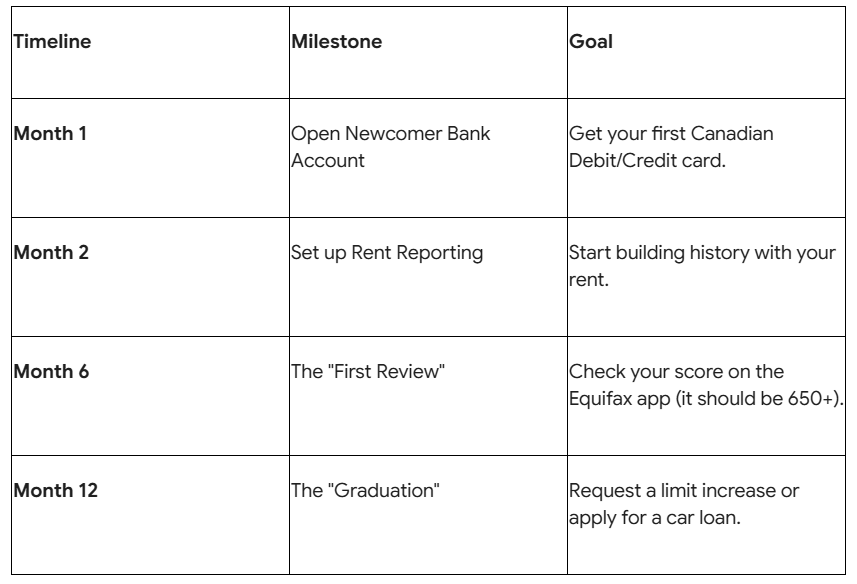
Your First 12 Months: The Credit Milestone Map

Why LendingMoney.ca Loves Newcomers

At LendingMoney.ca, we don’t think No History means No Potential. We work with alternative lenders who look at your Global Professional Standing and your Canadian Income rather than just a 3-digit number.

If you’re a newcomer with a high-paying job but the bank says you need to wait two years for a mortgage, we have the Alternative solutions to get you into a home sooner.

Just landed in Canada and ready to build your future? [Connect with a Financial Hero] at LendingMoney.ca. We’ll help you navigate the system and fast-track your credit journey.

Blogs Credit Building Credit Score Personal Finance

The Top 5 Credit Myths of 2026

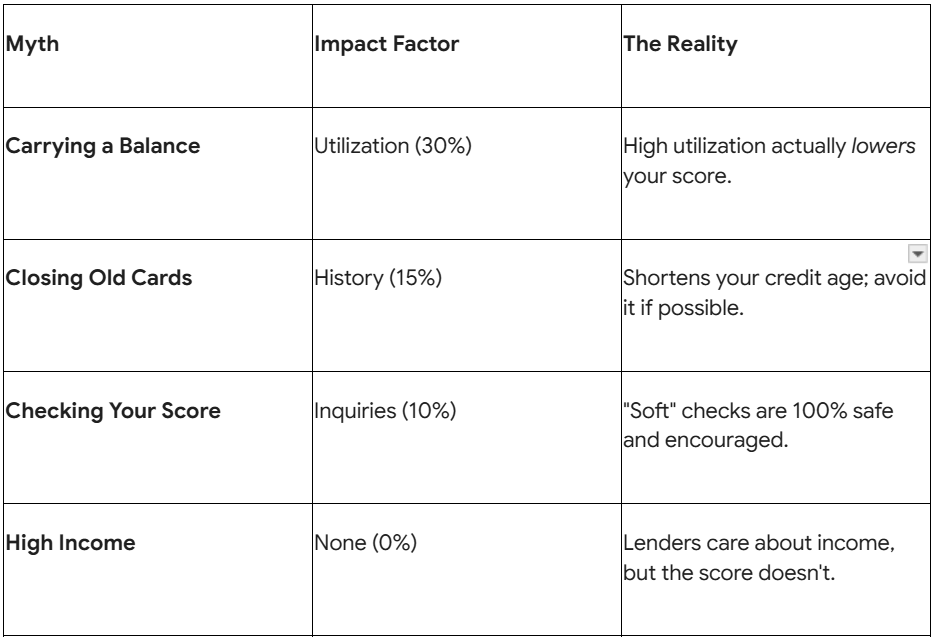
Myth 1: Carrying a Balance Boosts Your Score

The Myth: “You need to leave $20 or $30 on your credit card every month so the bank sees you’re using it and earns some interest.”

The 2026 Truth: Carrying a balance does nothing for your score except cost you money. In 2026, with credit card interest rates still averaging 19%–22%, “carrying a balance” is just a donation to the bank.

  • The Hero Move: The credit bureaus only care that you used the card and paid the bill. Pay your statement in full every single month. Your score will be higher, and your bank account will be fuller.

Myth 2: Checking Your Own Score Lowers It

The Myth: “If I log into an app to see my score, it counts as an ‘inquiry’ and drops my points.”

The 2026 Truth: Checking your own score is a Soft Inquiry, and in 2026, it is considered a vital habit for financial health. Whether you use the Equifax app, TransUnion, or a third-party service like Borrowell, checking your own data has zero impact on your score.

  • The Hero Move: Check your score once a month. With the rise of AI-driven identity theft in 2026, being the first to spot a suspicious inquiry is your best defense.

Myth 3: Closing Old Accounts “Cleans Up” Your Report

The Myth: “I don’t use that old $500 card from college anymore; I should close it to simplify my life.”

The 2026 Truth: Closing your oldest account is like deleting the first five chapters of a book. 15% of your score is based on Credit History Length. If you close your oldest card, your “average age of accounts” drops, and so does your score.

  • The Hero Move: Keep the old card open. Put one small, recurring bill on it (like a $15 Spotify sub) and set it to auto-pay. This keeps the “history” alive without you having to carry the physical card.

Myth 4: Your Income Impacts Your Credit Score

The Myth: “I just got a big promotion and a $20,000 raise, so my credit score should go up next month.”

The 2026 Truth: The credit bureaus have no idea how much money you make. Your credit report tracks behavior, not wealth. A person making $40,000 a year can have a perfect 850 score, while a CEO making $500,000 can have a 500 score if they are disorganized with payments.

  • The Hero Move: While income doesn’t help your score, it does help your Debt-to-Income (DTI) ratio. Use that raise to pay down your balances; that is what will trigger the score jump.

Myth 5: “No Debt” Means a Perfect Score

The Myth: “I pay for everything in cash and have no loans, so my credit must be amazing.”

The 2026 Truth: In the eyes of a 2026 lender, “No Credit” is almost as risky as “Bad Credit.” If you have no history of borrowing and repaying money, a lender has no data to predict if you’ll pay them back.

  • The Hero Move: You need “Active Tradelines.” Even if you have the cash, use a credit card for daily purchases and pay it off immediately. You want to prove you can manage credit responsibly before you need a major loan, like a mortgage.

2026 Credit “Quick Stats”

Don’t Let Myths Stop Your Progress

The 2026 financial world moves fast, and “common knowledge” is often outdated. At LendingMoney.ca, we help you cut through the noise with facts. Whether you’re recovering from a consumer proposal or just trying to break the 800-point barrier, we provide the Credit Rehabilitation tools to get you there.

Ready to see the real story behind your credit score? [Connect with a Financial Hero] at LendingMoney.ca today and let’s build a strategy based on 2026 facts, not 1990 myths.

Blogs Mortgage Tips Self-Employed Mortgages

Tax Deductions That Hurt Mortgage Odds

In the world of Canadian tax planning, a “good year” for your accountant is often a “bad year” for your mortgage broker. As we move through 2026, the gap between tax savings and borrowing power has widened, with lenders applying forensic-level scrutiny to self-employed applications.

If you are a business owner planning to buy or refinance a home, you need to understand that every dollar you “write off” to save $0.25 in taxes could cost you $5.00 in mortgage qualifying room. Here are the top five tax deductions that are most likely to hurt your mortgage odds in 2026.

1. Aggressive Vehicle Expenses (Section 9)

While the CRA allows you to deduct fuel, insurance, and repairs based on your business-use percentage, lenders in 2026 are wary of high vehicle write-offs.

  • The Problem: If you brought in $100,000 but claimed $25,000 in “vehicle expenses,” a bank sees your income as $75,000.
  • The 2026 Impact: Lenders now require 24 months of detailed logs to prove these expenses are “non-discretionary.”
  • The “Hero” Strategy: Some alternative lenders will “add back” 15–20% of vehicle expenses to your income, but traditional “A-Lenders” will not. If you’re buying soon, consider scaling back the “detailed method” of vehicle deductions.

2. Large Capital Cost Allowance (CCA) Claims

CCA is “depreciation”—a non-cash expense that allows you to write off the cost of big items like computers (Class 50) or equipment over several years.

  • The Problem: In 2026, the “Immediate Expensing” rules allow you to write off up to $1.5M in equipment instantly. This can drop your taxable income to near-zero.
  • The Lender’s View: While this is a “paper loss” (you didn’t actually lose the money this year), most banks use your Line 15000 (Net Income) as the starting point for their math.
  • The Strategy: At LendingMoney.ca, we work with lenders who understand that CCA is a “non-cash” add-back. We can often add this back to your income to boost your borrowing power, whereas a big bank might just see a “loss” on your T1 General.

3. High Travel & Entertainment Costs

In a post-pandemic world, the CRA has increased scrutiny on “Meal and Entertainment” (50% deductible). Mortgage lenders have followed suit.

  • The Problem: High travel and dining costs suggest a “lifestyle-heavy” business. Lenders worry that if your business hits a slow patch, these costs are actually “essential” to keeping your clients, meaning they aren’t truly discretionary.
  • The 2026 Rule: Lenders are now comparing your entertainment-to-revenue ratio. If you’re spending 15% of your gross income on “networking meals,” it raises a red flag regarding your actual take-home pay.

4. Heavy Home Office Deductions (T2125)

In 2026, the “flat rate” $2/day method is a distant memory. Business owners must use the “Detailed Method,” pro-rating rent, utilities, and mortgage interest.

  • The Problem: While it’s great to write off 15% of your home costs, the lender sees this as a reduction in your net income.
  • The Irony: You are using your home to save on taxes, but that very deduction might prevent you from buying a better home.
  • The Strategy: If you are within 12 months of a mortgage application, speak to your accountant about “smoothing” these deductions. It might be worth paying a little more tax to show the $10,000 higher income the bank needs to see.

5. “Bad Debt” Write-Offs

If a client didn’t pay you and you write it off as “Bad Debt,” it tells a story to a lender.

  • The Problem: Beyond the lower income, a high “Bad Debt” line tells a lender that your business may have “collection issues” or “low-quality clients.”
  • The 2026 Impact: Lenders are looking for stability. They would rather see a slightly lower gross income than a high gross income with 10% in bad debt write-offs. It signals a lack of cash-flow predictability.

Comparison: Tax Strategy vs. Mortgage Strategy

The LendingMoney.ca “Add-Back” Solution

At LendingMoney.ca, we specialize in Credit Rehabilitation for the self-employed. We use an “Add-Back” approach that many big banks refuse to use. We can often take your net income and “gross it up” by adding back:

  • Amortization/Depreciation (CCA)
  • Home Office Expenses
  • One-time legal or professional fees

Don’t let a “great” tax return ruin your mortgage dreams. [Connect with a Financial Hero] at LendingMoney.ca for a “Pre-Tax Review” of your application today.

Blogs

What is a Power of Sale in Ontario? Your 2026 Emergency Guide

In Ontario, if you miss a mortgage payment, your lender doesn’t usually go to court to take your house (that’s foreclosure). Instead, they use a legal “shortcut” called Power of Sale.

This process allows the lender to sell your home to recover their money without needing a judge’s permission for the sale itself. Because it is faster and cheaper for the bank, it is the dominant way mortgages are enforced in Ontario. If you’ve received a “Notice of Sale,” the clock is already ticking. Here is the breakdown of the process.

1. The Timeline: How Fast Does It Move?

In 2026, lenders are moving quicker than ever to protect their capital. The transition from a “missed payment” to “losing the house” can happen in as little as 3 to 4 months.

  • Day 15 of Default: Once you are 15 days behind, the lender has the legal right to issue a Notice of Sale.
  • The 35-Day “Redemption Period”: This is your most critical window. By law, the lender must give you 35 days (40 if mailed) to “redeem” the mortgage.

Day 80+: If the redemption period ends and you haven’t paid, the lender can apply for a Writ of Possession. This is the document that allows the Sheriff to physically evict you and change the locks.

2. Power of Sale vs. Foreclosure: The Key Difference

Many people use these terms interchangeably, but they have a massive impact on your wallet.

The Good News: In a Power of Sale, if your house sells for $800,000 and you only owe $500,000, the remaining $300,000 (minus fees) belongs to you.

3. The “Legal Fee” Snowball

The most dangerous part of a Power of Sale isn’t the interest, it’s the fees. In 2026, once a file is sent to the lender’s lawyer, the costs explode:

  • Lender’s Legal Fees: $2,500 – $7,000+
  • Appraisal Fees: $500 – $1,000
  • Property Inspection/Management: $1,000+
  • Realtor Commissions: 5% of the sale price.

If you owe $10,000 in arrears, by the time the house is listed, you might actually need $30,000 to stop the sale. Acting early is the only way to save your equity.

4. Can You Stop a Power of Sale?

Yes. Until the moment the lender signs a “Statement of Purchase and Sale” with a new buyer, you have the right to stop the process.

  • The “Cure”: You can pay the arrears and costs to bring the mortgage back into good standing.
  • The “Payoff”: You can pay the entire mortgage balance in full.
  • The 2026 Strategy: Most homeowners in this situation cannot get a loan from a big bank. At LendingMoney.ca, we provide Emergency Bridge Loans. We pay off the bank’s arrears and legal fees immediately, “voiding” the Power of Sale and giving you 12 months to breathe and refinance properly.

5. The Lender’s Duty of Care

In Ontario, the lender cannot simply “fire sale” your home to their cousin for $1. They have a legal duty to:

  • Get an Appraisal: They must determine the fair market value.
  • Market the Property: It must be listed on the MLS (Multiple Listing Service) to ensure the public can bid on it.
  • Act in Good Faith: If they sell it for significantly less than it’s worth, you can sue them for the difference.

Don’t Wait for the Sheriff

A Power of Sale is a legal process, but it is also a financial negotiation. If you have equity in your home, you have options. You can sell the home yourself (which is always cheaper than letting the bank do it), or you can refinance with an alternative lender like LendingMoney.ca.

Have you received a “Notice of Sale Under Mortgage”? [Upload Your Notice] for a free, confidential review. We’ll help you calculate your equity and find the “Hero Move” to save your home.

Alternative Lending Blogs

The Lending Spectrum: B Lenders (Trust Companies) vs. Alternative Lenders

When a “Big Six” bank says no, most Canadians assume their only remaining option is a high-interest private loan. However, there is a massive middle ground occupied by B Lenders and Alternative Lenders.

While both are “alternatives” to traditional banks, they serve very different purposes. At LendingMoney.ca, we want you to understand exactly where you fit on this spectrum so you can choose the right tool for your financial recovery.

1. What is a B Lender ? (The Trust Company)

B Lenders are essentially “Bank-Lite.” They are federally or provincially regulated financial institutions, often including Trust Companies (like Home Trust or Community Trust) and specialized banks (like Equitable Bank).

  • Who they are for: The Near-Prime borrower. You have a decent job and a decent house, but maybe your credit score is 600 instead of 700, or you are self-employed and can’t prove every dollar of income.
  • The 2026 Rules: B Lenders are still heavily regulated. While they are more flexible than the Big Six, they still have strict boxes you must fit into regarding your debt-to-income ratios.
  • The Rates: They offer a “middle-ground” rate—usually 1% to 2% higher than a standard bank rate.

The Catch: They almost always require a 20% down payment because they do not offer CMHC-insured mortgages.

2. What is an Alternative Lender ? (LendingMoney.ca)

An Alternative Lender is a non-institutional provider of capital. We aren’t bound by the same rigid “stress tests” or federal “Capital Adequacy” rules that govern banks and trust companies.

  • Who we are for: The “Big Picture” borrower. You might be in a Consumer Proposal, recovering from a bankruptcy, or dealing with an “unconventional” property that an institution won’t touch.
  • The Flexibility: We don’t just look at a credit score. We look at equity, cash flow, and your plan for the future. If you have a solid Exit Strategy (a plan to get back to a bank in 1–2 years), we can provide the funding that institutions won’t
  • The Speed: Because we don’t have layers of institutional committees, we can move at lightning speed—often funding a deal in 24 to 48 hours.

Key Differences at a Glance (2026)

3. Why the B Lender Might Still Say No

In 2026, even B Lenders have become more cautious. Because they are “Deposit-Taking” institutions, they have to answer to regulators about the “quality” of their mortgage book.

If you have active collections, an un-discharged bankruptcy, or significant CRA debt, a B Lender Trust Company will likely still decline your application. They want “bruised” credit, not “broken” credit.

4. The LendingMoney.ca Bridge Strategy

This is where we come in. We don’t compete with B Lenders; we prepare you for them.

Most of our clients use our Alternative Lending solutions as a 12-month bridge.

  1. We provide the funds to pay off the collections, settle the CRA debt, or buy out the Consumer Proposal.
  2. While you are with us, we implement your Credit Rehabilitation plan.
  3. After 12 months, your “broken” credit has become “bruised” (or better), and we “graduate” you to a B Lender or even back to an A Lender bank.

Which One Do You Need?

  • Choose a B Lender if your credit is “okay” and you just need a bit more flexibility on your income proof than the Big Six allows.
  • Choose an Alternative Lender (LendingMoney.ca) if you need speed, have a complex situation, or need a financial “reset” to clear old debts before you can qualify anywhere else.

Still not sure which “box” you fit into? [Talk to a Financial Hero] at LendingMoney.ca. We’ll analyze your situation and tell you exactly which lender is the right stepping stone for your journey.