Blogs CRA Credit Building Credit Score Personal Finance

Welcome to Canada: Your 2026 Guide to Building Credit from Day 1

Moving to a new country is a monumental achievement. You’ve navigated the immigration process, secured a place to live, and perhaps started a new career. However, many newcomers face a frustrating catch-22: you need credit to rent an apartment, get a phone plan, or buy a car, but you can’t get credit because you have no Canadian history.

In 2026, the Big Six banks and alternative lenders like LendingMoney.ca have new tools to help you bridge this gap. Here is your roadmap to building a Financial Hero profile in your first 12 months.

1. The 2026 Reality: Your Foreign History Matters (Finally)

For decades, your credit history stayed behind in your home country. In 2026, that has changed thanks to cross-border data partnerships.

  • The Bridge Program: Companies like Nova Credit now partner with Canadian lenders to pull your credit history from countries like India, the UK, Brazil, the Philippines, and more.
  • The Hero Move: Before you apply for a standard Newcomer Package, ask if the lender can use an international credit report. This could allow you to skip the secured card phase and go straight to a high-limit unsecured card.

2. Step One: The Newcomer Banking Package

Every major Canadian bank (RBC, TD, Scotiabank, etc.) offers a specific “Start Right” or Newcomer bundle.

  • What’s included: Usually a chequing account with no fees for a year and a specifically designated newcomer credit card.
  • The 2026 Advantage: Many of these cards now offer limits up to $5,000 to $15,000 without a Canadian credit score, provided you show proof of your Permanent Residency (PR) or a valid Work Permit.

3. The Cell Phone Credit Hack

In 2026, your phone bill is one of your most powerful credit-building tools.

  • The Strategy: Avoid “Pre-paid” plans. While they are easy to get, they don’t report to the credit bureaus.
  • The Move: Opt for a “Post-paid” monthly plan with a provider like Rogers, Bell, or Telus. These providers report your on-time payments to Equifax, helping you build a “tradeline” before you even have your first credit card statement.

4. Rent Reporting: Making Your Biggest Expense Count

Historically, paying rent did nothing for your credit score. In 2026, Rent Reporting has become a standard feature for savvy newcomers.

  • How it works: Services like Chexy or Landlord Credit Bureau allow you to report your monthly rent payments to Equifax and TransUnion.
  • The Benefit: Since rent is likely your largest monthly payment, showing 12 months of on-time rent can boost a newcomer’s score by 40 – 70 points faster than a credit card alone.

5. Beware of the Hidden Credit Checks

As a newcomer, you are often applying for many things at once: an apartment, a car, a phone, and electricity.

  • The Risk: Each Hard Inquiry can drop your score slightly. Too many in your first month can make you look “credit hungry.”
  • The 2026 Strategy: Use Digital ID (like the new GC Sign-In or provincial digital wallets) where possible. Many landlords and utility providers in 2026 now accept “Digital Identity Verification” which uses a Soft Inquiry that doesn’t hurt your score.

Your First 12 Months: The Credit Milestone Map

Why LendingMoney.ca Loves Newcomers

At LendingMoney.ca, we don’t think No History means No Potential. We work with alternative lenders who look at your Global Professional Standing and your Canadian Income rather than just a 3-digit number.

If you’re a newcomer with a high-paying job but the bank says you need to wait two years for a mortgage, we have the Alternative solutions to get you into a home sooner.

Just landed in Canada and ready to build your future? [Connect with a Financial Hero] at LendingMoney.ca. We’ll help you navigate the system and fast-track your credit journey.

Blogs Credit Building Credit Score Personal Finance

The Top 5 Credit Myths of 2026

Myth 1: Carrying a Balance Boosts Your Score

The Myth: “You need to leave $20 or $30 on your credit card every month so the bank sees you’re using it and earns some interest.”

The 2026 Truth: Carrying a balance does nothing for your score except cost you money. In 2026, with credit card interest rates still averaging 19%–22%, “carrying a balance” is just a donation to the bank.

  • The Hero Move: The credit bureaus only care that you used the card and paid the bill. Pay your statement in full every single month. Your score will be higher, and your bank account will be fuller.

Myth 2: Checking Your Own Score Lowers It

The Myth: “If I log into an app to see my score, it counts as an ‘inquiry’ and drops my points.”

The 2026 Truth: Checking your own score is a Soft Inquiry, and in 2026, it is considered a vital habit for financial health. Whether you use the Equifax app, TransUnion, or a third-party service like Borrowell, checking your own data has zero impact on your score.

  • The Hero Move: Check your score once a month. With the rise of AI-driven identity theft in 2026, being the first to spot a suspicious inquiry is your best defense.

Myth 3: Closing Old Accounts “Cleans Up” Your Report

The Myth: “I don’t use that old $500 card from college anymore; I should close it to simplify my life.”

The 2026 Truth: Closing your oldest account is like deleting the first five chapters of a book. 15% of your score is based on Credit History Length. If you close your oldest card, your “average age of accounts” drops, and so does your score.

  • The Hero Move: Keep the old card open. Put one small, recurring bill on it (like a $15 Spotify sub) and set it to auto-pay. This keeps the “history” alive without you having to carry the physical card.

Myth 4: Your Income Impacts Your Credit Score

The Myth: “I just got a big promotion and a $20,000 raise, so my credit score should go up next month.”

The 2026 Truth: The credit bureaus have no idea how much money you make. Your credit report tracks behavior, not wealth. A person making $40,000 a year can have a perfect 850 score, while a CEO making $500,000 can have a 500 score if they are disorganized with payments.

  • The Hero Move: While income doesn’t help your score, it does help your Debt-to-Income (DTI) ratio. Use that raise to pay down your balances; that is what will trigger the score jump.

Myth 5: “No Debt” Means a Perfect Score

The Myth: “I pay for everything in cash and have no loans, so my credit must be amazing.”

The 2026 Truth: In the eyes of a 2026 lender, “No Credit” is almost as risky as “Bad Credit.” If you have no history of borrowing and repaying money, a lender has no data to predict if you’ll pay them back.

  • The Hero Move: You need “Active Tradelines.” Even if you have the cash, use a credit card for daily purchases and pay it off immediately. You want to prove you can manage credit responsibly before you need a major loan, like a mortgage.

2026 Credit “Quick Stats”

Don’t Let Myths Stop Your Progress

The 2026 financial world moves fast, and “common knowledge” is often outdated. At LendingMoney.ca, we help you cut through the noise with facts. Whether you’re recovering from a consumer proposal or just trying to break the 800-point barrier, we provide the Credit Rehabilitation tools to get you there.

Ready to see the real story behind your credit score? [Connect with a Financial Hero] at LendingMoney.ca today and let’s build a strategy based on 2026 facts, not 1990 myths.

Blogs Home Buying Mortgages Personal Finance

Strength in Numbers: How to Qualify for a Mortgage as a Single Parent in Canada (2026 Guide)

The dream of homeownership shouldn’t disappear just because you are a single parent. Whether you are starting over after a divorce or raising a family on your own, the path to a mortgage is often clearer than you think. While the “single income” challenge is real, Canada’s 2026 mortgage rules include several “boosters” specifically designed to help families succeed.

At LendingMoney.ca, we believe every family deserves a stable place to call home. Our “Hero” approach means we help you find the hidden income and special programs that traditional banks might overlook. Here is how to qualify for a mortgage as a single parent in 2026.

1. Unlock "Hidden" Qualifying Income

When a bank looks at your mortgage application, they calculate your Debt-to-Income (DTI) ratio. For a single parent, your salary is only one part of the equation. In 2026, lenders are more flexible than ever about what counts as “qualifying income.”

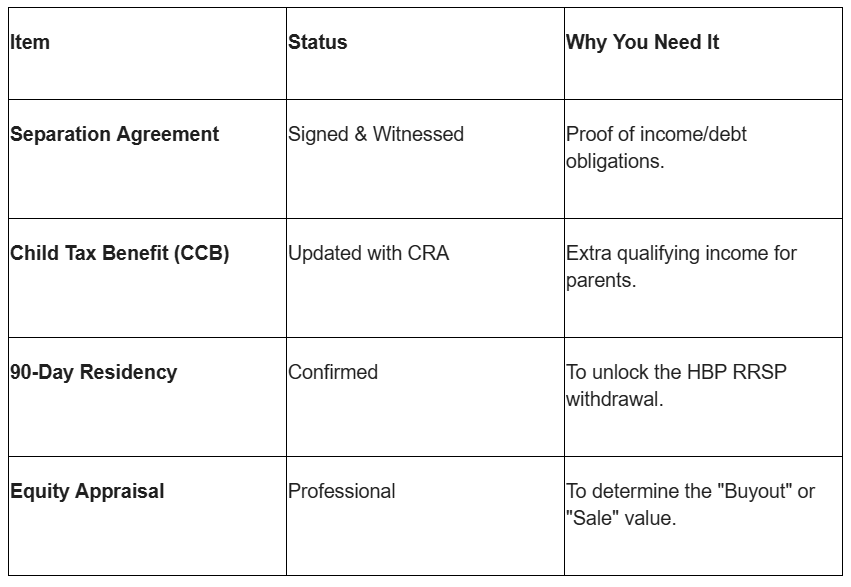
  • Canada Child Benefit (CCB): Most lenders now accept 100% of your CCB payments as qualifying income for children under the age of 15. This monthly “lifeline” can add thousands of dollars to your annual qualifying total.
  • Child Support & Spousal Support: If you have a written separation agreement or a court order, this support is considered stable income. Most lenders allow support payments to make up to 30–50% of your total qualifying income, provided you can show a history of consistent payments.
  • Boarder or Rental Income: If you are buying a home with a “mortgage helper” (a legal basement suite), you can often use 50–100% of the projected rental income to help you qualify for a larger mortgage.

2. Leverage New 2026 Government Incentives

The Canadian government has introduced several landmark measures in the Making Life More Affordable for Canadians Act (Bill C-4) that directly benefit single-parent households.

  • The First-Time Home Buyer GST Rebate: As of 2026, the GST is fully eliminated on new homes priced up to $1 million for first-time buyers. This can save you up to $50,000 on the purchase price of a new build—money that stays in your pocket for furniture or emergency savings.30-
  • Year Amortization: Single parents buying newly constructed homes can now qualify for 30-year mortgages (up from the traditional 25). This lower monthly payment makes it much easier to pass the “Stress Test” on a single income.
  • The “Second Chance” First-Time Buyer Rule: Even if you owned a home with your ex-spouse, you can qualify as a “first-time buyer” again if you have been living separate and apart for at least 90 days due to a relationship breakdown. This unlocks the Home Buyers’ Plan (HBP), allowing you to withdraw up to $60,000 tax-free from your RRSP.

3. The Power of "Home Start" and Low Down Payments

You don’t need a 20% down payment to buy a home. Through CMHC-insured mortgages, you can enter the market with as little as 5% down.

  • CMHC Home Start: This program is specifically designed to help families with a minimum credit score of 600. If your score took a dip during a separation, this program provides a realistic pathway back into homeownership without requiring a “perfect” 700+ score.
  • Flex Down Options: Some lenders allow you to use “non-traditional” sources for your down payment, such as a gift from a family member or even a personal loan, provided your credit and income are stable.

4. Tackle the "Stress Test" with Credit Rehabilitation

The biggest hurdle for single parents is the “Mortgage Stress Test,” which requires you to prove you could handle payments if interest rates were higher.

  • Consolidate Before You Apply: If you are carrying high-interest car loans or credit card debt, it eats into your “Total Debt Service” ratio. Using a LendingMoney.ca consolidation loan to pay off these small debts before applying for a mortgage can drastically increase the amount a mortgage lender will give you.
  • The “Hero” Strategy: By clearing $400/month in credit card payments through consolidation, you could potentially qualify for an additional $50,000 to $70,000 in mortgage principal.

5. Build Your "Professional Team"

Qualifying as a single parent requires a more nuanced approach than a standard application. You need experts who understand family law and alternative lending.

  • Mortgage Brokers: They have access to “B-Lenders” who are more flexible with child support and CCB income than the major banks.
  • Financial Heroes: At LendingMoney.ca, we help you bridge the gap by cleaning up your credit and consolidating debt so your mortgage application is “bank-ready.”

Final Thoughts: Your Family's New Chapter

Being a single parent takes incredible strength, and that same strength can build a financial foundation for your children. By combining government rebates, child-related tax benefits, and a smart credit rehabilitation strategy, the keys to your own front door are within reach.

Ready to see how much home you can actually afford? [Connect with a Financial Hero] at LendingMoney.ca and let’s build your path to homeownership today.

Blogs Credit Score Debt Relief Personal Finance

The Road Back: How to Rebuild Your Credit After Bankruptcy in Canada

Receiving your bankruptcy discharge is a major milestone. It’s the moment the legal weight of your past debts is lifted, giving you a clean slate to build upon. However, many Canadians feel a sense of “credit paralysis” after discharge, worried that their score will never recover or that they are permanently “blacklisted” from borrowing.

At LendingMoney.ca, we see bankruptcy as a reset button, not a life sentence. While the record of your bankruptcy will stay on your credit report for 6 to 7 years, your credit rehabilitation can—and should—begin the very same day you receive your discharge.

Here is your step-by-step roadmap to rebuilding a strong, healthy credit score in Canada.

1. Audit Your Post-Discharge Credit Report

The first thing you must do is ensure your “clean slate” is actually clean. Sometimes, creditors fail to update their records, and debts that were legally discharged still appear as “active” or “delinquent.”

  • Action Step: Request your free credit reports from Equifax Canada and TransUnion Canada.
  • What to Look For: Ensure every debt included in your bankruptcy is marked as “Discharged in Bankruptcy” and shows a $0 balance. If you see errors, dispute them immediately through the bureau’s website.

2. Start Small with a Secured Credit Card

You cannot build a credit score without active credit. Since traditional unsecured cards may be out of reach initially, a Secured Credit Card is the “Hero” tool of credit rebuilding.

  • How it Works: You provide a small security deposit (typically $500) to the lender, and they give you a credit card with a limit equal to that deposit.
  • The Strategy: Use this card only for small, fixed expenses—like your monthly phone bill or one grocery trip. Pay the balance in full and on time every month.
  • Why it Matters: These lenders report your on-time payments to the credit bureaus just like a regular card, proving to the system that you can manage credit responsibly again.

3. Layer in a Credit Builder Loan

Lenders like to see a “credit mix.” Having both a credit card (revolving credit) and an installment loan (fixed payments) shows a higher level of financial discipline.

  • The Credit Builder Model: Many specialized lenders in Canada offer “Credit Builder Loans.” Unlike a traditional loan where you get the money upfront, the lender holds the loan amount in a locked savings account while you make monthly payments.
  • The Reward: Once the loan is paid off, the money is released to you. More importantly, every single one of those payments was reported to the bureaus, significantly padding your positive payment history.

4. Master the "30% Rule" (Utilization)

Even if you have a low credit limit (like $500), you should never max it out. Your Credit Utilization Ratio—how much of your available credit you use—is a huge factor in your score.

  • The Goal: Keep your balance below 30% of your limit at all times. On a $500 card, that means never owing more than $150.
  • Pro Tip: Pay your card off multiple times a month. This ensures that when the credit bureau “snaps a photo” of your account, your balance looks low and controlled.

5. Automate Everything

After bankruptcy, a single missed payment can be devastating to your recovery. Your payment history is the single most important part of your score (35%).

  • Action Step: Set up pre-authorized debits for your cell phone, utilities, and your new secured credit card.
  • The Safety Net: Treat your “Due Date” as a hard deadline. Even if you only pay the minimum (though paying in full is better), an on-time payment keeps your momentum moving forward.

6. Avoid "Credit Repair" Scams

You may see ads promising to “erase bankruptcy” or “fix credit overnight” for a high fee.

  • The Truth: No one can legally remove accurate information from your credit report. Only time and consistent, positive behavior can rebuild your score.
  • Our Approach: At LendingMoney.ca, we don’t believe in “quick fixes.” We believe in Credit Rehabilitation—providing you with the real tools (loans and advice) that actually move the needle.

Your Rebuild Timeline: What to Expect

  • 0–6 Months: Focus on getting your first secured card and auditing your report.
  • 6–12 Months: Your score should begin to stabilize. This is a good time to add a second “tradeline” (like a small installment loan).
  • 12–24 Months: With a clean post-discharge history, you may begin qualifying for competitive car loans or even store-brand unsecured credit cards.

Final Thoughts: The Journey is Worth It

Rebuilding after bankruptcy is a marathon, not a sprint. Every on-time payment is a brick in the foundation of your new financial life. By being intentional and using the right tools, you can reach a 700+ credit score much faster than you think.

Are you ready to stop looking back and start building your future? [Apply for a Credit Rebuilding Plan] with LendingMoney.ca and let’s get your journey started.