
Blogs CRA Credit After CRA Debt Settlement

How to Fix Your Credit After a CRA Debt Settlement

Settling a debt with the Canada Revenue Agency (CRA) is a massive relief, but it often leaves a “footprint” on your financial life. In 2026, the CRA does not report your tax balances to credit bureaus like Equifax or TransUnion, but the actions they take to collect that debt certainly do.

If you’ve recently paid off a CRA debt through a settlement, a refinance, or a Consumer Proposal, here is your 2026 roadmap to Credit Rehabilitation.

1. Verify the “Lien Release”

If your tax debt was severe enough that the CRA registered a Notice of Certification (Lien) against your property, paying the debt is only half the battle.

  • The Reality: The CRA does not always automatically notify the Land Registry or the credit bureaus that the lien is gone.
  • The Hero Move: Ensure your lawyer obtains a Cessation of Charge or a Discharge of Lien. You must send a copy of this document to both Equifax and TransUnion. Until you do, a lender looking at your “Public Records” section will still see an active tax lien, which is a major “Red Flag.”

2. Address “Indirect” Credit Damage

While the CRA itself doesn’t report late payments, the symptoms of tax debt usually hurt your score. If you were behind on taxes, you likely missed other payments or maxed out credit cards to keep up.

  • The Audit: Now that the CRA is paid, go through your credit report. Are there “30-day lates” on your credit cards from the months you were struggling with tax debt?
  • The Rehabilitation: You cannot delete accurate late payments, but you can “drown them out” with new positive data. Start a streak of 12 months of perfect payments on your remaining accounts. In the 2026 algorithm, recent behavior carries more weight than year-old mistakes.

3. Re-Establish “A-Lender” Tradelines

Many people use a Private Mortgage or a High-Interest Loan to settle their CRA debt. While effective, these “C-Lender” products don’t always help your score.

  • The Move: To move back to a bank (A-Lender), you need at least two active tradelines with at least a $2,000 limit.
  • The 2026 Strategy: If your cards were closed, open a Secured Credit Card and a Small Installment Loan. At LendingMoney.ca, we recommend using these for small, recurring utility bills to prove to the bank that your “Tax Crisis” was an isolated incident, not a lifestyle.

4. The “Income Stability” Story

In 2026, underwriters are looking for the “Why” behind your tax debt.

  • The Narrative: If you settled a CRA debt, be prepared to explain it in your next mortgage application. Was it a one-time business error? A divorce?
  • The Proof: Keep your Notice of Assessment (NOA) for the year the debt was settled. Showing a “$0 Balance Owing” on your most recent NOA is the single most important document for a newcomer or self-employed borrower to prove they are back in “Hero” status.

5. Avoid the “Refund Set-Off” Trap

Even after a settlement, the CRA may sometimes “offset” your future tax refunds or GST credits to cover old interest or penalties that weren’t fully cleared.

  • The Risk: If you are counting on a tax refund to pay your credit card bill, and the CRA takes it, you could miss a payment and hurt your score again.
  • The Hero Move: Check your CRA “My Account” portal one month after your settlement to ensure the balance is exactly $0.00. Don’t assume the file is closed until you see it in digital black and white.

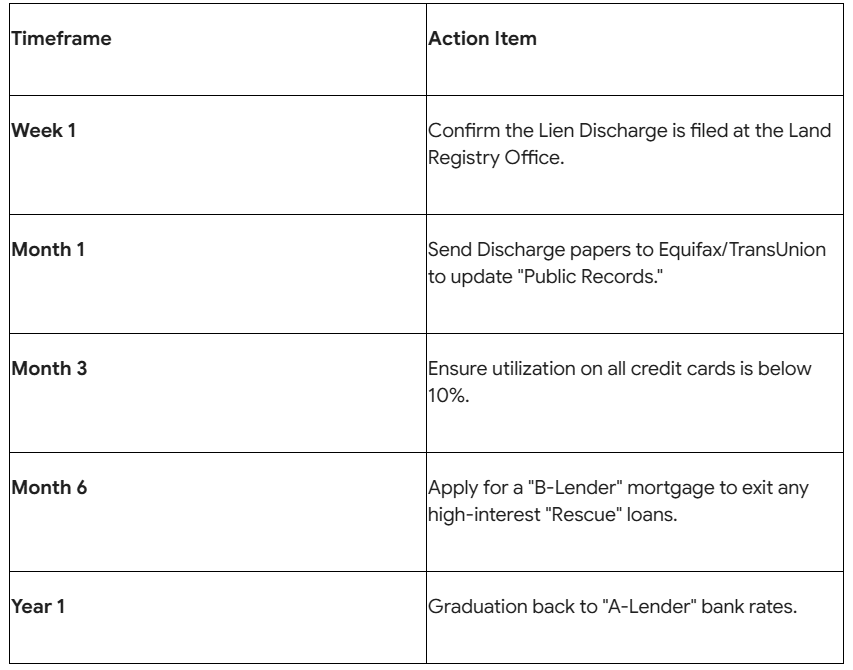
Credit Rehab Timeline After CRA Settlement

Your Fresh Start Starts Now

Paying the CRA is the hardest part. Now that the government is out of your bank account, you can finally focus on building your own wealth. At LendingMoney.ca, we don’t just help you pay the debt; we stay with you for the Credit Rehabilitation that follows.

Just finished a CRA settlement and want to know your next move? [Connect with a Financial Hero] at LendingMoney.ca. We’ll help you clean up the paperwork and get you back on the path to a prime-rate mortgage.

Blogs CRA Credit Building Credit Score Personal Finance

Welcome to Canada: Your 2026 Guide to Building Credit from Day 1

Moving to a new country is a monumental achievement. You’ve navigated the immigration process, secured a place to live, and perhaps started a new career. However, many newcomers face a frustrating catch-22: you need credit to rent an apartment, get a phone plan, or buy a car, but you can’t get credit because you have no Canadian history.

In 2026, the Big Six banks and alternative lenders like LendingMoney.ca have new tools to help you bridge this gap. Here is your roadmap to building a Financial Hero profile in your first 12 months.

1. The 2026 Reality: Your Foreign History Matters (Finally)

For decades, your credit history stayed behind in your home country. In 2026, that has changed thanks to cross-border data partnerships.

  • The Bridge Program: Companies like Nova Credit now partner with Canadian lenders to pull your credit history from countries like India, the UK, Brazil, the Philippines, and more.
  • The Hero Move: Before you apply for a standard Newcomer Package, ask if the lender can use an international credit report. This could allow you to skip the secured card phase and go straight to a high-limit unsecured card.

2. Step One: The Newcomer Banking Package

Every major Canadian bank (RBC, TD, Scotiabank, etc.) offers a specific “Start Right” or Newcomer bundle.

  • What’s included: Usually a chequing account with no fees for a year and a specifically designated newcomer credit card.
  • The 2026 Advantage: Many of these cards now offer limits up to $5,000 to $15,000 without a Canadian credit score, provided you show proof of your Permanent Residency (PR) or a valid Work Permit.

3. The Cell Phone Credit Hack

In 2026, your phone bill is one of your most powerful credit-building tools.

  • The Strategy: Avoid “Pre-paid” plans. While they are easy to get, they don’t report to the credit bureaus.
  • The Move: Opt for a “Post-paid” monthly plan with a provider like Rogers, Bell, or Telus. These providers report your on-time payments to Equifax, helping you build a “tradeline” before you even have your first credit card statement.

4. Rent Reporting: Making Your Biggest Expense Count

Historically, paying rent did nothing for your credit score. In 2026, Rent Reporting has become a standard feature for savvy newcomers.

  • How it works: Services like Chexy or Landlord Credit Bureau allow you to report your monthly rent payments to Equifax and TransUnion.
  • The Benefit: Since rent is likely your largest monthly payment, showing 12 months of on-time rent can boost a newcomer’s score by 40 – 70 points faster than a credit card alone.

5. Beware of the Hidden Credit Checks

As a newcomer, you are often applying for many things at once: an apartment, a car, a phone, and electricity.

  • The Risk: Each Hard Inquiry can drop your score slightly. Too many in your first month can make you look “credit hungry.”
  • The 2026 Strategy: Use Digital ID (like the new GC Sign-In or provincial digital wallets) where possible. Many landlords and utility providers in 2026 now accept “Digital Identity Verification” which uses a Soft Inquiry that doesn’t hurt your score.

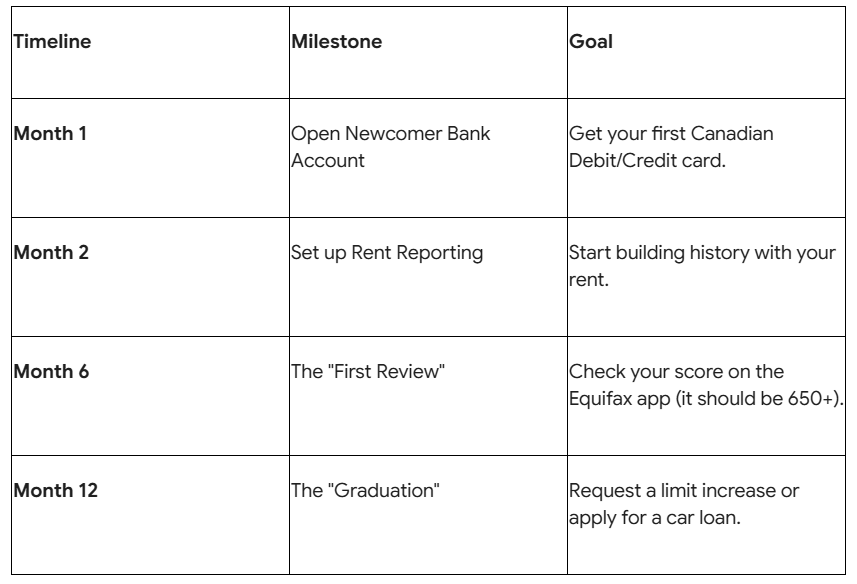
Your First 12 Months: The Credit Milestone Map

Why LendingMoney.ca Loves Newcomers

At LendingMoney.ca, we don’t think No History means No Potential. We work with alternative lenders who look at your Global Professional Standing and your Canadian Income rather than just a 3-digit number.

If you’re a newcomer with a high-paying job but the bank says you need to wait two years for a mortgage, we have the Alternative solutions to get you into a home sooner.

Just landed in Canada and ready to build your future? [Connect with a Financial Hero] at LendingMoney.ca. We’ll help you navigate the system and fast-track your credit journey.

CRA Rebuild Credit

The Aftermath: How to Rebuild Your Credit After a CRA Lien is Removed

Paying off the Canada Revenue Agency (CRA) and having a property lien discharged is a massive victory. You’ve stopped the daily compounding interest and protected your home. But for many Canadians, the celebration is cut short when they check their credit score a month later and see it hasn’t budged – or worse, it’s still being dragged down by the ghost of the lien.

In 2026, a CRA lien is considered a Public Record. Even after it is paid, the history of that legal action can stay on your credit report for up to six years. At LendingMoney.ca, we don’t just help you clear the debt; we help you navigate the aftermath. Here is how to rebuild your credit after a CRA lien has been removed.

1. Confirm the Release of Lien is Registered

The CRA does not automatically notify the credit bureaus when you pay your debt. They only update the Land Registry Office.

  • The Step: Once your debt is paid, the CRA will issue a Cessation of Charge or a Discharge of Lien. Ensure your lawyer has registered this document at the Land Registry Office.
  • The Verification: Perform a “Title Search” on your property a few weeks after payment to confirm the lien is officially gone. Without this legal step, the credit rebuilding process cannot begin.

2. Update the Credit Bureaus Manually

Because a tax lien is a matter of public record, Equifax and TransUnion only update their files when their automated systems sweep the public courts – which can take months.

  • The Strategy: Be proactive. Send a copy of your Certificate of Discharge directly to both Equifax and TransUnion.
  • What it Changes: They won’t delete the lien history, but they will update the status to Paid or Satisfied. To a 2026 lender, a satisfied lien is a sign of someone who took responsibility, whereas an “Active” lien is an automatic decline.

3. Distance Yourself from the R9 Mentality

If your tax issues were severe, some of your other accounts may have slipped into “R9” (Collection) status.

  • The Problem: The CRA lien is the “Big Fire, but the small “brush fires (like a $200 forgotten phone bill) are what keep your score in the 500s.
  • The Rehabilitation Move: Use a portion of the funds from your LendingMoney.ca Equity Loan to clear every single small collection account on your report. A Clean report with a satisfied lien is much easier to rebuild than a report littered with active mini-collections.

4. Re-Establish Tradelines (The 2+2+2 Rule)

To get back to A-Lender mortgage rates after a lien, you need to prove you are a reliable borrower again. In 2026, we recommend the 2+2+2 Rule:

  • 2 Years: Of clean, post-lien history.
  • 2 Credit Cards: With at least $1,500 to $2,000 limits (Secured cards are fine!).
  • 2 Installment Loans: Such as a car loan or a credit-builder loan.

5. Master the Interest-Free Growth Strategy

The fastest way to boost a score after a public record hit is to lower your Credit Utilization Ratio.

  • The Math: If your new secured card has a $1,000 limit, never let the balance sit above $100 (10%).
  • The 2026 Trick: Pay your balance three days before the statement date. This ensures that when the bureau “records” your balance, it shows as $0 or near-zero, which maximizes your score jump.

6. The Human Element: Explain the Story

Even with a lower score, your 2026 financial story matters. If you are applying for credit while the lien is still on your record (marked as Paid):

  • Provide a Letter of Explanation: Explain the circumstances (e.g., Business downturn during 2024,or Medical emergency).
  • Show the Proof: Include the CRA discharge papers. Lenders in the Alternative and B-Lending space – like our partners at LendingMoney.ca -are much more likely to approve a Rebuilder who is transparent about their past.

Your Score is a Moving Target

A CRA lien is a heavy hit, but it isn’t permanent. By clearing the debt, updating the bureaus, and adding new, positive “Hero” tradelines, you can move from a “Lien-Scarred” report to a “Mortgage-Ready” report in as little as 12 to 24 months.

Ready to start your post-lien recovery? [Connect with a Financial Hero] at LendingMoney.ca. We’ll help you structure the financing to pay the CRA and build the roadmap to your future R1 rating.